
Several Indian real estate companies, including BPTP Ltd and Smartworld Developers, are rethinking or shelving their initial public offering (IPO) plans, which were expected to raise around 15,000 crore, due to weaker housing demand, higher costs, and a more cautious investment climate.

India's top 11 listed real estate developers are projected to achieve combined presales of 1.82 trillion by FY27, a significant increase from 1.49 trillion in FY26, demonstrating sustained sales momentum despite market challenges.

Non-resident Indians are increasingly investing in luxury homes in India, driven by geopolitical uncertainties, particularly the Iran war. This trend is observed across major cities like Mumbai, Bengaluru, and the National Capital Region, with developers noting a significant rise in NRI pre-sales. While some see it as a temporary shift, others believe India is becoming a stable, long-term investment destination for NRIs, especially those from West Asia.

Rental yield can indicate whether a property is undervalued, overvalued or fairly valued.

A Goldman Sachs report indicates that US and Indian equity markets are becoming less attractive due to lower free cash flow (FCF) yields as valuations rise, while European markets offer significantly higher yields. Concurrently, India's top-listed residential real estate developers experienced a moderation in pre-sales in Q1FY27, attributed to delayed project approvals, limited launches, and high year-ago bases, though underlying housing demand remains healthy.

Avoid builders with very large commitments.
Private equity investments in Indian real estate dropped 15 per cent in July-September to USD 819 million amid global uncertainties, according to property consultant Anarock.

The aggregate value of private equity (PE) deals in Indian real estate has declined nearly 30 per cent to $3.6 billion in 2023-24 (FY24) as compared to $5.1 billion in FY20, according to a report released on Monday.
India's leading listed real estate developers are increasingly focusing on pan-India expansion, diversifying beyond their traditional home markets into high-demand residential areas like MMR, NCR, Bengaluru, Hyderabad, Pune, and Chennai to tap broader housing demand and reduce reliance on single-city market cycles.

Mixed-use real estate projects, integrating residential, commercial, retail, and hospitality segments, are gaining significant traction in India as developers seek to maximise returns, optimise land use, and diversify cash flows, with experts predicting 35-40% of urban real estate supply will be mixed-use by 2030.
Platform-style partnerships between global investors and Indian developers are expected to gain further traction over the next few years. This comes as institutional capital increasingly shifts from one-off asset acquisitions to scalable, long-term strategies.

Indian Real Estate Investment Trusts (REITs) are generating an average yield of 6-7.5 per cent for unitholders, better than many mature markets, including the US, according to a report by CREDAI and Anarock. CREDAI, the apex body of Indian real estate developers, and property consultant Anarock released a report 'Indian REITs - A Gateway to Institutional Real Estate' at an event in Singapore.
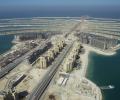
Ongoing geopolitical tensions in West Asia have slowed deal momentum in Dubai's luxury residential market, but Indian high-net-worth individuals (HNIs) are not exiting their marquee assets, with any 'discounted' resale deals attributed to investor liquidity stress rather than geopolitical flight.

Since the first Reit listing in 2019, the sector has grown to a market capitalisation of about $18 billion as of August 2025, and is projected to cross $25 billion by 2030.

Deferred payment plans may come with a cost, which may not be immediately visible.

The inauguration of Noida International Airport (NIA) is set to significantly increase property values in micro-markets along the Yamuna Expressway, with projections indicating a 28 per cent rise for plots and 22 per cent for apartments over the next two years, according to Colliers.
After three post-pandemic years of an upcycle, it was a mixed bag for the realty sector in 2025, with sales volumes in the residential real estate moderating across top cities, and commercial real estate and institutional investments emerging as standout performers. Residential: Volumes soften, value holds firm.

India's top listed real estate developers reported steady growth in Q4FY25, supported by healthy pre-sales, even as earnings reflected signs of moderation amid elevated housing prices and subdued launches.
Gurugram, already established as the corporate hub of Delhi-NCR, is increasingly attracting developers from outside the region, drawn by robust end-user demand, premium pricing, and emerging development opportunities.
India's leading conglomerates are stepping up investments in real estate, recasting what was once a peripheral activity into a core growth driver. Supported by strong balance sheets, established brands and access to long-term capital, major business houses including Aditya Birla, Tata, Godrej, L&T, Raymond, Wadia, Shapoorji Pallonji, Mahindra and Adani are positioning realty as a strategic pillar within their diversified portfolios.

Affordable homes, priced under Rs 40 lakh per unit, may not be attractive anymore, not just for developers but also for investors, with the segment seeing a 26 per cent price rise over three years since 2022 versus 40 per cent returns from luxury homes priced Rs 1.5 crore and above.

Office redevelopment is emerging as a key growth frontier for developers as India's commercial real estate market shifts towards quality, sustainability, and capital efficiency. With land parcels scarce in central business districts (CBDs) and demand for Grade A offices remaining strong, developers and investors are increasingly turning to ageing office stock in prime locations to unlock value.
Developers are entering one of the busiest construction cycles, with the top four firms planning launches worth Rs 1.13 trillion over the near to medium term, even as execution faces pressure from approval delays, labour shortages, rising costs, and contractor capacity limits across the industry.

High-street rentals continue to outpace those of malls, as retailers focus on prime locations and are willing to pay a premium for visibility. Between 2021 and 2025, rental values on prime high street have grown 7-15 per cent annually, driven by strong consumption density and limited new supply, even outpacing grade A malls, which grew by 5-8 per cent, according to Anarock.

The government's Budget announcements providing tax holiday for data centres, setting up of city economic regions (CERs) and funding to improve infrastructure in Tier-II and -III cities may give an indirect boost to India's realty sector, said industry executives.

India's leading real estate developers are accelerating their push into plotted development, a segment once dominated by unorganised players but now reshaped by branded offerings, faster cash flows and evolving buyer preferences. This strategic shift is visible across markets such as Bengaluru, Chennai, Hyderabad, Gurugram, peripheries of the Mumbai Metropolitan Region (MMR) and even Tier-II cities.
Top real estate developers are expected to report improved earnings and resilient presales growth, even as overall housing sales across major Indian cities declined during the July-September quarter (Q2) of 2025-26. The anticipated earnings growth in what is typically a subdued quarter is credited to steady sustenance sales, improved collections, the strong positioning of listed developers, and sustained demand for premium homes.

'The momentum is driven by rising affluence, strong demand from HNIs (high net worth individuals) and NRIs (non-resident Indians), an increased appetite for larger, well-located homes by branded developers, and support from the economy.'

Brookfield Asset Management will invest $1 billion to develop Asia's largest global capability centre (GCC) in Mumbai's Powai, the New York-based global alternative asset manager said in a statement on Friday. The infrastructure arm of Canada's investment firm will develop the campus across 6 acres with 2 million square feet that can be let out.
India's housing market has remained resilient this festival season (Dussehra-Diwali period), despite global macroeconomic challenges, tech-sector layoffs, and affordability pressures, with developers reporting 10-25 per cent year-on-year (Y-o-Y) rise in home sales across major cities.
Top real estate developers reported healthy presales growth in the second quarter of FY26, aided by a steady pipeline of new project launches. While overall housing momentum across major Indian cities moderated during the quarter, listed players remained relatively insulated.
After three straight quarters of decline, India's housing market is pinning hopes on the ongoing festival season to revive sales momentum. While 2025 may still end with sales volumes below 2024 levels, developers believe the seasonally strong October-December quarter could narrow the gap, aided by stable interest rates, festive incentives, and resilient demand in the premium segment.

The US's recent 50 per cent tariff on Indian exports will have a trickledown effect on India's affordable housing, potentially derailing demand as well as supply in this segment, according to experts. Pointing to worker incomes and jobs in micro, small and medium enterprises (MSMEs), and small and medium enterprises (SMEs) that typically make up majority of the customer base of affordable housing, would take a hit in the near terms due to the tariff change, further crippling India's affordable housing sector, already reeling from the impact of the Covid-19 pandemic.

Housing demand should improve nationwide after the Reserve Bank of India (RBI) cut the repo rate by a larger-than-expected 50 basis points (bps) on Friday, said real estate industry executives. The rate cut comes after housing sales in top Indian cities in the first quarter of 2025 dipped 28 per cent due to skyrocketing residential property prices and geopolitical headwinds, according to Anarock.
Currently, India has five publicly listed Reits: Brookfield India Real Estate Trust, Embassy Office Parks Reit, Mindspace Business Parks Reit Nexus Select Trust, and Knowledge Realty Trust.

In a relief to homebuyers, assets in a real estate project that have been handed over to the allottee would be kept out of the liquidation process of the company, the latest amendment to the rules by the Insolvency and Bankruptcy Board of India (IBBI) has said. The notification dated February 12 said: "For the purposes of clause (e) of sub-section (4) of section 36, wherever the corporate debtor has given possession to an allottee in a real estate project, such asset shall not form a part of the liquidation estate of the corporate debtor." Real estate experts call it a "pragmatic approach" by the regulator. "However, there are many cases where possession has not been given because the property is stuck in insolvency.

Private equity (PE) investments in real estate sector fell 32 per cent to $4.3 billion in the last fiscal year mainly due to the COVID-19 pandemic, according to property consultant Anarock. PE investments in real estate stood at $6.3 billion in the 2020-21 financial year. According to Anarock Capital's FY22 year-end edition of its FLUX report, PE inflows in real estate were $5.1 billion in FY'20, $5.6 billion in FY'19 and $5.4 billion in 2017-18 fiscal. The consultant attributed the fall in PE investments in real estate to the second wave of the COVID-19, leading to multiple lockdowns in various parts of the country.

Capital value appreciation outpaced rental value growth in several key micro-markets between 2021 and 2024, with Noida Sector 150 in the National Capital Region (NCR) leading the pack with a 128 per cent rise in capital values compared to rental value growth of just 66 per cent, according to a report by property consulting firm Anarock.

Data centres are increasingly becoming a key part of the real estate landscape, as reality firms - with rich expertise in land acquisition, construction and dealing with government approvals - are seeing them as opportunities to build long-term assets with continuous revenue flow.

Interest in green living is rising, with clean air and open spaces becoming key selling points for residential projects, particularly as Indian cities struggle with deteriorating air quality.
